“Do we bring our greatest generosity and richest forgiving to our marriages? Do we offer our whole souls and our best efforts as an offering? Or do our partnerships get half-hearted, occasional efforts?” (Goddard)
Just the other day my husband and I were talking about ways we unintentionally hurt each other through things we say or don’t say in certain situations. After a discussion, we realized that it was more than fair to expect to be treated no worse than we would treat a stranger, co-worker, friend, sports partner, etc. Certainly, when we understand the sacredness of marriage and have a desire to consecrate ourselves to our partners and marriage, we would want to treat and be treated with more love, admiration and appreciation than someone we don’t know.
If you’ve been married for very long at all, you know that marriage is not a fairy tale. If you started your marriage with that expectation, you have probably been rudely awakened to the difficulty of brining two predetermined scripts together to form a perfect union. However, a marriage provides a greater opportunity to develop the important qualities of compromise, consensus, unconditional love, tolerance, selflessness, and commitment than anywhere else.
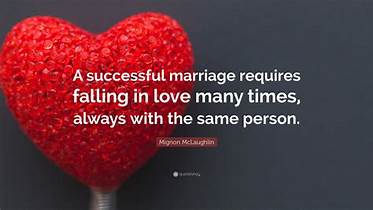
Brother Kent Brooks of the BYU faculty of Church History and Doctrine observed: “Our capacity to love a spouse deeply and our ability to experience great joy in marriage are commensurate with the degree to which we are willing to suffer and hurt, to labor and toil, and to persevere through moments of unhappiness, stress, disappointment, and test of our patience and love for our partners.” As we wind our way through the days, weeks, months and years of marriage we soon learn that very few things are worth causing contention, hurt, and disappointment that canker our souls and destroy our relationships. “Consecration is a covenant that moves us from asking how we can get our needs met to asking how we can bless and serve.” (Goddard)
“In a book entitled The Peacegiver, James Farrell shows that most of our discontents are caused by our shriveled, narrow views of our partners. When we have the mind of Christ, there is no one we cannot fully love nor gladly serve.” (Goddard) Learning to see and appreciate the good and ignore the negative in our partners helps us bring the spirit of Christ into our personal lives and our marital relationships. Seeing our spouses as our Heavenly Father sees them allows us to look beyond the surface imperfections and irritations and find the Child of God.
Webster’s Dictionary defines consecrate as: “to make or declare sacred; to devote to a purpose with or as if with deep solemnity or dedication.” “Consecration in marriage is not simply about receiving our entrance card to the Celestial Kingdom. It’s also about becoming qualified for the life we will presumably be living there. This requires a transformation of character.” (Goddard) Marriage is not easy and wasn’t meant to be, but if both spouses are selflessly dedicated to each other and to the marriage relationship, with the help of our Heavenly Father and gospel principles, we can experience “a transformation of character.”
In Drawing Heaven into your Marriage, Goddard gives the following challenge, allowing us the opportunity to put into practice our positive thoughts and feelings regarding our spouse. Are you willing to try a 30-day experiment?
For 30 days:
- Show nothing but kindness and appreciation to your partner?
- Set aside complaints and disappointments and see their good intentions and best efforts in your partner?
- Rather than count the cost, will you consider seeing the investment. . .
- Invest your whole soul in the hope that you will gain eternal joy
And I would add:
- Give 5 positive comments to every negative comment (Gottman)
Sources:
Goddard, H.W. (2009). Drawing Heaven into Your Marriage, Cedar Hills, UT: Joymap Publishing
Gottman, J. M., & Silver, N. (2015). The seven principles for making marriage work (2nd ed.). New York: Harmony Books.

 BEYOND "I DO "