Financial Bondage!

Our current stage of the life includes both Stage 5 Married with Children Launched (Yes!) and Stage 6 Marriage and Retired. (Poduska, B. 2000) It was interesting as I read about the different stages of life cycles, how true to life they were for us.

I can honestly say that Stage 3: Married with Children Ages 10-19 was the most financially demanding. Up to this point, we felt in control of our budget and expenditures. The expenses for our family seemed to be doable and we still felt like we could enjoy life on our budget. However, once all five of our children were older it was another story altogether. Athletic shoes cost more than I would ever have spent on a clothing item. Lessons, team registrations, uniforms, school registration, clothes, every day shoes, prom, special dresses, dances, cheerleading, offices, transportation, double insurance, health issues, glasses, surgeries, college exploration trips, college tuition, books and dorm costs, etc. and etc., all began to add up in ways for which we were not prepared.

Our children were 16 years apart, so once it started, it seemed to never end. Although I had chosen to be a stay-at-home mom, I did work part time as much as possible to help make ends meet. This was the time that the dad was just beginning to get settled in his career but had not get produced a large enough income to accommodate for these added expenses.

We had tried to live within our budget to this point and been rather successful, but was not prepared for the onslaught of expenses that hit our budget at Stage 3. Another reason we were not prepared, was we did not know about the Church’s financial guidelines of spending one penny less than you make, and we were not able to start that now. The understanding of buying what you need, not what you want, was suddenly blurred. We found it difficult to say “We can pay for that team registration after we have saved enough, which should be in about three months.” Or “School registration has come at a bad time, so we will have to wait to pay it until we have saved enough.”  Or “We can’t pay for cheerleading until we have saved enough, so you will have to decline.” Therefore, this Stage 3 of Married with Children, was not our finest hour financially.

We did survive, with strong warnings to our adult children to avoid doing what we had done, but to plan ahead and stay completely out of debt. After Stage 5 Married with Children Launched we did return to a budget covering tithing, savings, retirement etc., and not spending more than we earned. We managed to recover from the debt we gained and become debt free. Now at the “Empty Nest Full of Life Stage,” (Poduska 2000, p. 205), we are financially prepared to enjoy. 

Being debt free is probably the most exhilarating feeling after having experienced the bondage that comes with financial debt. The feeling of being controlled by your money is not worth anything we might have purchased. It created anxiety and fear of the future. The secret is to say no to things that aren’t needs, but to plan ahead so that those things that feel like needs i.e., team registrations and uniforms, can be purchased with previously allotted funds.

Here are some of my favorite financial advice to live by from LDS Conference talks:

Joseph B. Wirthlin, April 2004. “All too often a family’s spending is governed more by their yearning than by their earning. They somehow believe that their life will be better if they surround themselves with an abundance of things. All too often all they are left with is avoidable anxiety and distress.”

Elder Robert D. Hales, April 2009.  “To provide providently, we must practice the principles of provident living: joyfully living within our means, being content with what we have, avoiding excessive debt, and diligently saving and preparing for rainy-day emergencies.”

Eldon Tanner, October 1979, “Money can be an obedient servant but a harsh taskmaster. Those who structure their standard of living to allow a little surplus, control their circumstances. Those who spend a little more than they earn are controlled by their circumstances. They are in bondage.”

Tom Perry, October 1995. “A well-managed family does not pay interest—it earns it.”

Gordon B. Hinckley, October 1998. “I urge you, brethren, to look to the condition of your finances. I urge you to be modest in your expenditures; discipline yourselves in your purchases to avoid debt to the extent possible. Pay off debt as quickly as you can, and free yourselves from bondage.”

Reference:

Poduska, B. (2000). Till Debt do us Part, (Chapter 11). Salt Lake City, Utah: Shadow Mountain.

Let Her Fly. Yes, Let Her Fly.

Church magazines: Sister Hinckley, you have said that your husband “always let me do my own thing. He never insisted that I do anything his way, or any way, for that matter. From the very beginning he gave me space and let me fly.” How has he done that?

Sister Hinckley: He never tells me what to do. He just lets me go. He has made me feel like a real person. He has encouraged me to do whatever makes me happy. He doesn’t try to rule or dominate me.

President Hinckley: I’ve tried to recognize my wife’s individuality, her personality, her desires, her background, her ambitions. Let her fly. Yes, let her fly! Let her develop her own talents. Let her do things her way. Get out of her way, and marvel at what she does…If there is anything that concerns me, it is that some men try to run their wife’s life and tell her everything she ought to do. It will not work. There will not be happiness in the lives of the children nor of the parents where the man tries to run everything and control his wife. They are partners. They are companions in this great venture that we call marriage and family life (Marjorie Pay and Gordon B. Hinckley, Ensign, October 2003, pp. 22, 27).

I love this conversation about President and Sister Hinckley’s marital relationship! That is one of the parts of my marriage for which I am truly grateful. Feeling repressed, controlled, or monitored feels totally opposite to how our Heavenly Father created marriage to be. As stated by President Hinckley (2002) “In the marriage companionship there is neither inferiority nor superiority. . . “ (p. 52). Because this is not always the case, it’s important that couples begin conversation regarding the equality and respect of roles in the relationship with honesty and trust. The Proclamation is a great resource to begin your conversation if you are struggling with this concept.

A family council – couple only – would be a great time to discuss how each feels about their relationship. I know I have been burdened with heavy feelings that needed to be addressed and having regular councils has helped to bring up those concerns without discord or contention. I felt very much like Joseph Smith when councils in the Church were finally established, ‘I feel as if I was relieved of a burden which was almost too heavy for me to bear, and it rejoices my soul, that I am no any longer to be entirely alone in the world” (Smith, History of Joseph Smith by His Mother, 152) Beginning with words of love and appreciation and a prayer to invite the spirit will make all the difference in the outcome of the council.

In President Eyring’s (1998) talk on “That We May Be One” he stated, “Where people have that Spirit with them, we may expect harmony. The Spirit puts the testimony of truth in our hearts, which unifies those who share that testimony. The Spirit of God never generates contention (see 3 Ne. 11:29). It never generates the feelings of distinctions between people which lead to strife (see Joseph F. Smith, Gospel Doctrine, 13th ed. [1963], 131). It leads to personal peace and a feeling of union with others. It unifies souls. A unified family, a unified Church, and a world at peace depend on unified souls” (p. 2). Being able to discuss issues together in a council where we have prayed to have the spirit with us can help us change in ways that would otherwise seem impossible.

Resources:

Ballard, R. (1997) Counseling With Your Councils.“Chapter 2: General Councils in the Church” (Accessible Version)

Eyring H. B.,“That We May Be One” Ensign, May 1998, 66.

Miller, R. B. “Who Is the Boss? Power Relationships in Families.” BYU Conference on Family Life, Brigham Young University, March 28, 2009.

Wise Precautions to Safeguard Your Marriage from Infidelity

We’re just friends. There’s nothing wrong with that. Don’t make it into something it’s not.

Do you know someone who has been caught in the “just friends” trap? It is so easy to develop a great friendship with someone who thinks like you, is interested in the same things as you, seems to be strong in the very area your spouse is weak, makes you laugh and listens to how you feel?  It happens very slowly and brings a sense of excitement. As Elder Gene R. Cook states in his talk, The Eternal Nature of the law of Chastity, “In the early stages of extramarital flirting, the intoxicating feeling of someone’s affection and the sense of our innocence may blind us to the seriousness of our situation.” At this point Satan has you right where he wants you; in his web of deceit.

Three situations come to mind of friends who have been caught in this web of deceit. Two were able to pull back and save their marriages because their spouses were understanding and both applied gospel principles to help save the marriage. One did not recover. The connection with the “friend” was greater than the connection with his spouse and he refused to acknowledge that anything was amiss in what he was doing or give up the friend. Things progressed inappropriately. He was devastated when she said she would divorce him if he would not recommit to her and their marital covenants. Both “just friends” left their families. It was a very sad scenario. It all started as friends, innocently sharing study time at school, but it ended in covenants and hearts being broken.

The covenants we make regarding personal purity include not only sexual intimacy, but emotional and mental intimacy as well. Fidelity includes refraining from physical contact—but that is not all. “Fidelity also means complete commitment, trust, and respect between husband and wife. Inappropriate interactions with another person can erode fidelity.” (Goddard)

Goddard’s “Progression of Unfaithfulness,” shows how we can enter dangerous territory very quickly, blinded to where it has taken us.

  • Behaviors that seem innocent (i.e., missionary work, doing good, helping in some capacity)
  • An affection grows that claims part of one’s heart
  • Extramarital flirting. Justification – “no harm intended”
  • Relationship declared as “special”
  • Opportunities created to see “special friend”
  • (One worries what others will say/think)
  • Excuses made, lies told to hide time and resources spent on another person
  • Spouse is displaced. Emotional intimacy exchanged with “special friend”
  • Faultfinding with spouse
  • Fantasies about the other person
  • Physical affection – a squeeze, a kiss, a hug
  • Sexual relations

President Ezra Taft Benson said, “What does it mean to love someone with all your heart? It means to love with all your emotional feelings and with all your devotion.” When an inappropriate relationship begins to take hold of our hearts, we would be wise to make every effort to recommit complete love and devotion to our spouse. Valuing our spouse and the very qualities that drew us to them will help to turn our hearts towards our marriage relationship. Remember, “The grass is greener on the side of the fence you water.” (Goddard)

Perhaps we should ask ourselves some questions:

  • Have you set a standard for yourself to avoid spending time alone with a person of the opposite sex?
  • Do you often find yourself thinking of and missing your friend?
  • Have you made sure you are not flirting with anyone but your spouse?
  • Do you share worries, goals, dreams, feelings and thoughts with a friend of the opposite sex that you should be sharing with your spouse?
  • Do you notice times when you feel drawn to someone other than your spouse? Do you act on it?
  • Do you nurture and feed your own relationship so that it continues to grow?
  • Do you incorporate the power of repentance and the gift of the Atonement in order to move away from your friend and back into your marriage relationship?

Spencer W. Kimball reminds us, “Thou shalt love thy wife with all thy heart, and shalt cleave unto her and none else” (D&C 42:22). And, to the woman it is paraphrased: “Thou shalt love thy husband with all thy heart and shalt cleave unto him and none else.

“And, when the Lord says all thy heart, it allows for no sharing nor dividing nor depriving. The words none else eliminate everyone and everything” – even “just friends.”

Sources:

Goddard, H.W. (2009). Drawing Heaven into Your Marriage, Cedar Hills, UT: Joymap Publishing

Matheson, K. W. (2009) Fidelity in Marriage. It’s More Than You Think

Charity in Marriage – Seeking to Understand.

“Charity is accepting someone’s differences, weaknesses, and shortcomings; having patience with someone who has let us down.” (Marvin J, Ashton) 70% of what we don’t like will never change! The only way to get partners to change that 30% is by enjoying them the way they are! You can spot the irony. When we love our partners the way they are, we don’t care if they change! That is the very thing that liberates them to change. Acceptance is the key to change in those areas where it is possible.” (Goddard)

For over five years my husband and I volunteered at the Juvenile Detention Center where we taught and mentored boys ages 15-18. Many of them had been involved in some very serious crimes. One day on the way to the Center, I wondered how it was that we could feel so much love for them knowing what they had done and the lives they had negatively affected. It was then that I was told that we were able to love them because we had been blessed to see them as Heavenly Father sees them.

As they began to realize that we were there because we truly did love and care for them, separate from what they had done, they began to change and open their closed hearts to our love and concern for them. I do believe that as Goddard states, “acceptance is the key to change in those areas where it is possible.” When they realized that we weren’t there to judge them, they too began to see themselves as Heavenly Father sees them.

It’s the same way with our partners. Once we accept their imperfections and know they may never change, then we can learn to love and enjoy them the way they are. I know in my 49 years of marriage the more I have been able to focus on the positives, accentuate the positives, and talk about the positives, the dimmer the negatives have become and the more I have felt his love and acceptance of me. It’s important to remember, “Charity does not flow automatically from having an extraordinary spouse. It is primarily the result of the way we choose to see each other. The single most promising marriage fixing effort is not tinkering with our partners’ characters; it is in loving, cherishing, and appreciating them!” (Goddard)  It is in “[finding] the glory in our marital story.” (Gottman)

Sources:

Just as with our boys in the DT who responded and changed according to the positives on which we focused, so will our spouses begin to change because they feel our love and acceptance even with their imperfections. As Joseph Fielding Smith said, “We all have our weaknesses and failings. Sometimes the husband sees a failing in his wife, and he upbraids her with it. Sometimes the wife feels that her husband has not done just the right thing and she upbraids him. What good does it do? Is not forgiveness better? Is not charity better? Is not love better? Isn’t it better not to speak of fault, not to magnify weaknesses by iterating and reiterating them? Isn’t that better?”

Without charity as exemplified by Christ, our marital problems will seem insurmountable. “According to the scriptures, we love Him because He first loved us (1 John 4:19). The same can apply to marriage. Our partners will love us because we first love them. Love first. Don’t wait to be loved.” (Goddard). 

Goddard, H.W. (2009). Drawing Heaven into Your Marriage, Cedar Hills, UT: Joymap Publishing

Gottman, J. M., & Silver, N. (2015). The seven principles for making marriage work (2nd ed.). New York: Harmony Books. 

Consecration in Marriage

“Do we bring our greatest generosity and richest forgiving to our marriages? Do we offer our whole souls and our best efforts as an offering? Or do our partnerships get half-hearted, occasional efforts?” (Goddard)

Just the other day my husband and I were talking about ways we unintentionally hurt each other through things we say or don’t say in certain situations. After a discussion, we realized that it was more than fair to expect to be treated no worse than we would treat a stranger, co-worker, friend, sports partner, etc. Certainly, when we understand the sacredness of marriage and have a desire to consecrate ourselves to our partners and marriage, we would want to treat and be treated with more love, admiration and appreciation than someone we don’t know.

If you’ve been married for very long at all, you know that marriage is not a fairy tale. If you started your marriage with that expectation, you have probably been rudely awakened to the difficulty of brining two predetermined scripts together to form a perfect union. However, a marriage provides a greater opportunity to develop the important qualities of compromise, consensus, unconditional love, tolerance, selflessness, and commitment than anywhere else.

Brother Kent Brooks of the BYU faculty of Church History and Doctrine observed: “Our capacity to love a spouse deeply and our ability to experience great joy in marriage are commensurate with the degree to which we are willing to suffer and hurt, to labor and toil, and to persevere through moments of unhappiness, stress, disappointment, and test of our patience and love for our partners.” As we wind our way through the days, weeks, months and years of marriage we soon learn that very few things are worth causing contention, hurt, and disappointment that canker our souls and destroy our relationships. “Consecration is a covenant that moves us from asking how we can get our needs met to asking how we can bless and serve.” (Goddard)

“In a book entitled The Peacegiver, James Farrell shows that most of our discontents are caused by our shriveled, narrow views of our partners. When we have the mind of Christ, there is no one we cannot fully love nor gladly serve.” (Goddard) Learning to see and appreciate the good and ignore the negative in our partners helps us bring the spirit of Christ into our personal lives and our marital relationships. Seeing our spouses as our Heavenly Father sees them allows us to look beyond the surface imperfections and irritations and find the Child of God.

Webster’s Dictionary defines consecrate as: “to make or declare sacred; to devote to a purpose with or as if with deep solemnity or dedication.” “Consecration in marriage is not simply about receiving our entrance card to the Celestial Kingdom. It’s also about becoming qualified for the life we will presumably be living there. This requires a transformation of character.” (Goddard) Marriage is not easy and wasn’t meant to be, but if both spouses are selflessly dedicated to each other and to the marriage relationship, with the help of our Heavenly Father and gospel principles, we can experience “a transformation of character.”

In Drawing Heaven into your Marriage, Goddard gives the following challenge, allowing us the opportunity to put into practice our positive thoughts and feelings regarding our spouse. Are you willing to try a 30-day experiment?

For 30 days:

  • Show nothing but kindness and appreciation to your partner?
  • Set aside complaints and disappointments and see their good intentions and best efforts in your partner?
  • Rather than count the cost, will you consider seeing the investment. . .
  • Invest your whole soul in the hope that you will gain eternal joy

And I would add:

  • Give 5 positive comments to every negative comment (Gottman)

Sources:

Goddard, H.W. (2009). Drawing Heaven into Your Marriage, Cedar Hills, UT: Joymap Publishing

Gottman, J. M., & Silver, N. (2015). The seven principles for making marriage work (2nd ed.). New York: Harmony Books. 

The Destructive Power of Pride

The tumult and the shouting dies;

The captains and the kings depart.

Still stands thine ancient sacrifice,

An humble and a contrite heart.

Lord God of Hosts, be with us yet,

Lest we forget, lest we forget.

(Rudyard Kipling)

When we define pride, we tend to think of conceit, arrogance, self-centeredness, easily offended, hard-heartedness and lacking humility, etc. But according to President Benson in his talk entitled, Beware of Pride, we miss the most important part in failing to recognizing that pride is enmity towards God and each other. Defined, enmity means, “hatred toward, hostility to, or a state of opposition.” President Benson, reminds us that the antidote for pride is to have a broken heart and contrite spirit. There is no broken heart or contrite spirit when we allow pride to control our thoughts and actions.

Enmity – “It is the power by which Satan wishes to reign over us.”

One of Satan’s greatest accomplishments in today’s world has been his ability to allow selfishness to permeate our every thought and deed. We live in a “me” centered world, “how everything affects me” is all that matters. This “me” centered world includes “self-conceit, self-pity, worldly self-fulfillment, self-gratification, and self-seeking…

Another face of pride is contention. Arguments, fights, unrighteous dominion, generation gaps, divorces, spouse abuse, riots, and disturbances all fall into this category of pride. Contention in our families drives the Spirit of the Lord away. It also drives many of our family members away. Contention ranges from a hostile spoken word to worldwide conflicts.” (Benson) How pride affects our marriages and family relationships is of great importance to all of us. As we know, if Satan wants to destroy a society he will begin in the home with the marriage and the family.

How many pride games do you play? How do they affect the emotional and physical intimacy in your marriage relationship? Are you aware that these games put us in bondage? What price do you pay for playing these games?

  Ignore spouse, or give spouse the “cold shoulder.”

  Impatient with impatience.

  Caught up in who’ s right and who’s wrong.

  Blaming, defensiveness.

  Attack, counterattack.

  Score keeping, with intentions of noting who is winning or losing.

  Refusal to apologize first.

  Holding the other hostage by refusing to forgive.

  Proving superiority by bringing up spouse’s faults.

  Holding grudges.

  Sharing spouse’s weaknesses with others.

  Intentionally trying to create jealousies in spouse.

  Get others to create an alliance with you against your spouse.

  Putting words in spouse’s mouth to manipulate.

  Displaying an attitude of entitlement in the marriage.

  Stubbornness or unwillingness to change.

  Selfishness, thinking only of your needs.

  Unwillingness to learn from spouse.

  Fault finding.Withholding love and affection.

  The “silent treatment.”

I would add to this list, defensiveness; refusing to listen and hear what your spouse is saying. Proverbs 15:10, and Amos 5:10 states, The proud do not receive counsel or correction easily. In Matthew 3:9, John 6:30-59 it says, “Defensiveness is used by them to justify and rationalize their frailties and failures.”

In The Seven Principles for Making Marriage Work, by John M Gottman, we are taught that if we are too proud to listen to, or be influenced by, our spouses then there is an “81% chance that the marriage will self-destruct.” It requires humility and a contrite heart to be willing to listen to and respect a spouse’s opinions. “Wise partners, listen to learn from one another” (Nelson)

H Wallace Goddard, in Drawing Heaven into Your Marriage states, “Many of us grew up dreading humility and repentance. They felt like an unhappy encounter with humiliation. But, as we mature spiritually, we come to recognize humility and repentance as heavenly blessings. We cast off the tattered way of the natural man and put on the robe of righteousness. It is sweet.”

I remember when President Benson gave this talk. I carried around a copy about the size of a business card in my purse so I could read it often. It is amazing counsel for all of us. I found it interesting to  see how many times words referring to pride defined how I felt and yet I did not recognize those feelings as pride. Doing all that we can to keep the spirit in our lives will safeguard us against succumbing to pride. Satan disguises pride in any way beneficial to him and destructive to us and our relationships.

“Think of the repentance that could take place with lives changed, marriages preserved, and homes strengthened, if pride did not keep us from confessing our sins and forsaking them. (See D&C 58:43.) (Benson

Works Cited

Benson, E.T. “Beware of Pride,” Ensign, May 1989, 4

Gottman, J. M., & Silver, N. (2015). The seven principles for making marriage work (2nd ed.).

New York: Harmony Books. 

The Importance of Staying Emotionally Connected

Dr. Gottman explains the principle of “shared meaning” as the spiritual part of a marriage where a couple creates an inner life together; their culture of beliefs, goals, roles, values, and tradition (p260-261). I would like to connect this quote to that of a very special young woman and her family by sharing her story with you.

In 2013 my 18-year-old neighbor was diagnosed with a rare form of leukemia. She beat the cancer and had three successful bone marrow transplants – defying the odds. However, as she was trying to recover from the successful third bone marrow transplant her weakened body could not regain strength and she finally passed away Monday, June 3, at 7:17 pm.

The parents were divorced before the first onset of the leukemia so Suzanne was a single mom of four. They have, however remained friends and are very supportive of their children. There are three other children in the family ages 19, 16, 14. During the time that Ashtyn has had leukemia her mother, Suzanne, literally lived at the hospital with her, which often meant months without sleeping at home or being with her other children. She even spent months in Seattle receiving an experimental drug.

Suzanne was amazing as she posted daily, in great detail, about Ashtyn’s journey and shared both her own, her other children’s, and Ashtyn’s amazing faith, strength, courage and testimonies with the world. Everyone soon knew them by Ashtyn’s Army. These posts on Facebook went viral. There was an incredible community of support and words of love and encouragement during the entire six years of Ashtyn’s struggles. Both Ashtyn’s and Suzanne’s courage and positive attitude was an inspiration to all. Not only a family now, but a worldwide community was connected emotionally to Ashtyn and her fight against Leukemia.

When Ashtyn was not in the hospital and was able, they took trips to Disneyland or other long time family traditions. They spent hours together at home and at the hospital whenever possible, participating in and creating new rituals and traditions that connected them as individuals and as a family. Their strong faith and family values carried them through this difficult roller coaster ride. No one expected this miracle child to NOT make it. She had defied the odds so many times. 

For Ashtyn and her siblings, the critical support systems that had been developed through family, friends, neighbors, ward members, mentors and counselors, and those around the world reading Ashtyn’s Army posts and praying for her, allowed her to feel an emotional connection and support beyond anything most of us will ever experience.  

Ashtyn had been given several blessings over the years in which her mom felt she would live. The most emotional post was over Memorial Day weekend when her mom talked about if Ashtyn died, would she be able to trust God again? The very moment she is contemplating those thoughts, the President of The Church of Jesus Christ of Latter Day Saints, Russell M. Nelson, walks in and says, “I’ve been aware.” He wept with them and then gave them both a blessing.  That was just another testimony that God really is aware of our struggles, loves us, and wants to help us through our difficult times. He is always blessing his children with tender mercies. 

Although Suzanne was always mindful of her other children and stayed connected in any way she could, the chances of them experiencing negative outcomes, individually and collectively, from this adversity were great. However, the saving factor was the “protective factors include[ing] dispositional, familial, and extra familial characteristics. In aggregate, they are the positive forces that contribute to adaptive outcomes in the presence of risk (Garmezy, 1993). In the case of Ashtyn’ siblings this included the support systems that had been developed through friends, neighbors, her ward family, elementary, junior high, and high school mentors and counselors, and those around the world reading Ashtyn’s Army posts and praying for her.

On Memorial Day President Nelson paid a surprise visit to Ashtyn. The Lord is always mindful of his children.

Besides their strong faith and testimonies, Lyle J Burrup, LDS Family Services, in an article on Raising Resilient Children, gave other reasons that this family will not only survive, but will actually blossom. He said resilient children:

  • See life as a challenge and believe they can cope with those challenges and changes
  • View mistakes and weaknesses as opportunities to learn and accept that losing may precede winning.
  • Believe they can influence outcomes through effort imagination, knowledge and skill. They focus on what they can do rather than on what is outside their control
  • They see great purpose and meaning in life and people.

During this entire experience, I have watched these children, including Ashtyn, talk positively and with incredible faith about what they are experiencing individually and as a family. You feel the emotional connection between family members in the pictures and statements posted on Ashtyn’s Army blog. I do not know each of them personally enough to know their deepest inner thoughts, but I do know they see life as a challenge, believe they can influence outcomes, and see great purpose and meaning in life and people, and believe in each other and their connection within the family.

Of great importance to this family at this time of crisis and stress is the previously established closeness and emotional connection of family and friends that will help them endure this next stage of adversity. Their faith in, and testimonies of, Jesus Christ will help them push through this very difficult time and become even stronger because of it. Learning to understand and accept God’s will has been a bitter sweet lesson for this family.

If you are interested in more of this story you can access it at: https://www.facebook.com/AshtynsArmy

Fondness and Admiration

“[He] loved his wife so much that one day he almost told her” (Gottman).

That was funny to me but how often do we “almost tell her (him)?” I once promised myself that I was going to always communicate the loving and positive thoughts that came to my mind about my husband – at the moment I had the thought. I often called him at work to just say” I love you” or “I was just missing you.” Dr. John Gottman, in his book Seven Principles for Making Marriage Work, reminds us, “Fondness and admiration are two of the most crucial elements of a rewarding and long-lasting romance. . . . antidotes for contempt.”

“It feels like living in a desert.” This is how Dr. Gottman, describes marriages without at least five positive comments to every negative comment. I suddenly realized that I knew exactly what “It feels like living in a desert.”

Lately due, in part, to a son with physical and mental health challenges, our lives have become quite stressful. These stressful feelings were being directed at each other with short, snappy, comments that hurt and caused us both to feel defensive and criticized. Things felt far more negative than positive. This was definitely not normal for us. We didn’t fight, but we had started to resort to stonewalling and flooding. There seemed to be too much emotional baggage and we didn’t trust ourselves to handle a calm conversation so we just kept shelving the problems. I knew that the criticism, stonewalling, and flooding were not the real issues, only the result of other issues. Something needed to be done, but I didn’t quite know how to approach the issues without making them worse and finding a calm time together was becoming more difficult.

Then the other night, as I was reading about positive sentiment override, I realized something very important for us. We had become involved in negative sentiment override and I knew it could take an even more serious turn if we didn’t recognize and acknowledge it. Normally the comments that had offended us would have made us laugh or been seen as a tease or joke.  Now, everything felt personal, offensive, hurtful, and negative. We were reacting from a negative sentiment override rather than a positive sentiment override.

I asked if he would talk with me for a while and I read some of the things we had been reading in class. When I explained to him about positive and negative sentiment override it became clear to him as well that we had almost lost our positive foundation of understanding one another enough to not be offended by something said or done that was not meant to be personal or negative.

With positive sentiment override, little things are just simply understood and not taken personally. You understand why one of you might snap a little or why something was said emotionally and you aren’t offended. When that foundation becomes weakened, due to too much stress and continual negativity, or was never established, it can bring other destructive elements such as harsh startups, contempt, criticism, defensiveness, stonewalling, and flooding into the relationship.

The talk was amazingly freeing and powerful and gave us both a better understanding of what we had been experiencing. We have been able to regroup and remind ourselves of the fondness and admiration we have enjoyed in our forty-nine years of marriage. We no longer wanted to feel like we were “living in a desert.” Dr. Gottman believes, “masters of relationships” are very gentle, kind, and affectionate with each other. We wanted this in our relationship.

I appreciated the opportunity to discuss our situation before we were destroyed by the slippery slope of negative sentiment override. Being on the same page has given us a great spring board. We are still aware that we will need to work to stay connected and give our relationship the time it needs to re-establish and strengthen the positive sentiment override foundation, but are grateful for the recognition and vision of what needs to happen to avoid any negative sentiment override in our relationship.

References:

Gottman, J. M., & Silver, N. (2015). The seven principles for making marriage work (2nd ed.). New York: Harmony Books. 

Friendship and Marriage

Marriage is the most wonderful part of my life and I can’t imagine how my life would have played out without it. I do know however, that many influences can cause us to respond in ways that are damaging to the marital relationship. If you are seriously wanting to take care of your relationship I highly suggest the two books I have been reading. The first is, The Seven Principles for Making Marriage Work: A Practical Guide from the Country’s Foremost Relationship Expert, by John M. Gottman, PhD. The second is Drawing Heaven into your Marriage by H. Wallace Goddard, PhD. Since I have been around for a while and have seen and heard many experts talk about creating successful marriages, I wasn’t sure what new information this would bring. But I was pleasantly surprised and found that the principles employed in these books were extremely helpful in learning to avoid negative influences that can take their toll if not identified and corrected. I feel certain that if Goddard’s ideas and suggestions were compared with Gottman’s, although expressed differently, they would parallel each other in wisdom and successful marriage research results.


One of the most important ideas that Gottman promotes is that a solid marriage is based on a strong friendship. He states,“The strength of a couple’s friendship not only stokes the fire but also foretells the relationships future because it is the fundamental ingredient of positive sentiment override. We have been married for forty-nine years and I truly attribute our ability to overcome negative influences in our marriage to our deep friendship. This friendship has helped us establish what Gottman refers to as a Positive Sentiment Override. This means that when we keep our friendship strong, despite the difficult times, the positive thoughts about our marriages are so strong that they supersede the negative feelings that can sometimes dominate a relationship.
The very beginning of our marriage started as a friendship and continues today. Of course, that friendship starts with mutual respect, great conversations, and overall support and admiration for one another, but for us it also includes bantering, playfulness, (wrestling has been known to occur in our home), laughing, teasing, and sharing and participating in the same activities and interests. We still have our individual interests, but that only brings another dimension to the relationship as we share our separate experiences with each other.


The opposite of the Positive Sentiment Override is a Negative Sentiment Override. Gottman warns us that if we allow resentment and anger to build and the initial friendship dims, then everything said and done is interpreted negatively. Statements that would not normally be offensive become hurtful and are taken personally. This causes more negative behavior. I am reminded of the question, “is the glass half-full or half empty?” I have a friend who has said for years, “I hope I’m not still in this marriage next year.” They are still married, 40 plus years now, but she has never looked at her marriage as anything except half-empty. As I look at what they have I see a great marriage with a few hard times. She has always seen it as a bad marriage with a few good times. How we perceive our relationships has everything to do with who we become in those partnerships. 

Gottman refers to The Four Horsemen of trouble:  

 Criticism: Expresses negative feelings or opinions about the other’s character or personality.    

Contempt: Arises from a sense of superiority over one’s partner.

Disrespect: Defensiveness: Starts as a way to defend self but is also a way of blaming one’s partner.      

Stonewalling: One partner tunes out and stops responding.

You will want to read more about the Four Horsemen since they are a negatively powerful part of all our relationships at one time or another and lead to even more trouble if not addressed. If we fail to recognize the Four Horsemen, our marriages can literally fail because of them. Gottman more fully defines and shares examples of each horseman that can helps us understand the negative path we are choosing when one of the Four Horsemen shows up.


The second book I recommended was Drawing Heaven into your Marriage by H. Wallace Goddard. I loved Goddard’s approach to marriage because it reminds us that no matter what steps or principles we follow, being Christlike and applying gospel principles, is the key to a successful and happy marriage. I know that President Packer’s statement is truth: “If you seek for a cure that ignores faith and religious doctrine, you look for a cure where it never will be found.” Without the gospel as a guiding light in our marriage I don’t think we would be where and who we are today.

Just to tease you into wanting to read this book, here are some of my favorite statements by Goddard, “Good marriage is not about skills, it is about character,” “The surge of indignation that swells up when we are upset does not have to swamp our little boat. . .We can choose to calm the seas by the same power that Jesus used to calm the waters of Gennesaret” and “Marriage is perfectly designed to provoke us to desperation.” Christlike characteristics and gospel principles can help us not only avoid the desperation that marriage can provoke, but can enhance our relationships beyond our own vision of marital happiness.

References:

Gottman, J. M., & Silver, N. (2015). The seven principles for making marriage work (2nd ed.). New York: Harmony Books. 
Drawing Heaven Into Your Marriage by Goddard, H.W. (2009). Cedar Hills, UT: Joymap Publishing.

Be Aware of the Intent of the Enemy!

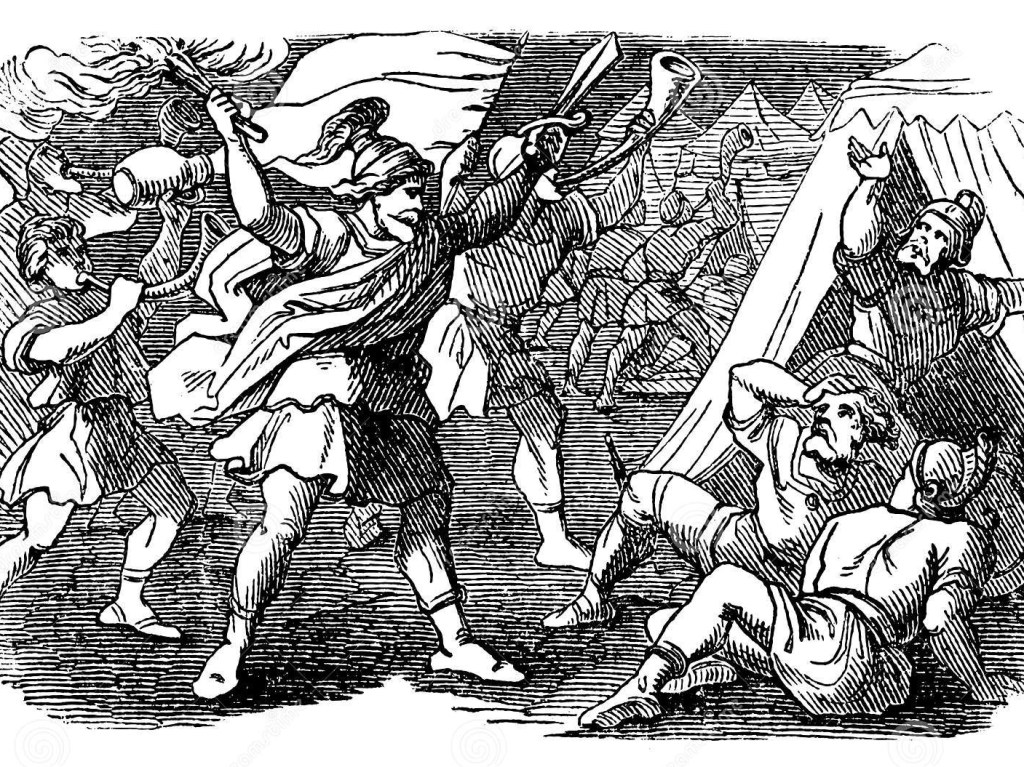
In our day and time, just as in biblical times of war, we need to be more aware of the enemy and understand his intent.

“. . .understanding of the intent of the enemy is a key prerequisite to effective preparation. We likewise should consider the intent of our enemy in this latter-day war” (Bednar).

Heavenly Father’s plan is to bring us understanding, happiness, security, spiritual safety, and eternal progression. He has given us clarification of the importance of marriage between a man and a woman and how to achieve family happiness and satisfaction in The Family: A Proclamation to the World (First Presidency). But this most important doctrine to the family has been attacked from all angles. Joseph Smith said, “The devil has no body, and herein is his punishment. He is pleased when he can obtain the tabernacle of man…All beings who have bodies have power over those who have not.” (Smith) Because Satan does not have a body and can therefore not marry, his intentions are to make us confused, uncertain, unhappy, and “miserable like unto himself” (2 Ne. 2:27). He desires to take marriage, family, and society down. What better way to do this than to target the core values of marriage and family?

As we look at the world today it’s easy to see Satan is having success in confusing and antagonizing those in society who would prefer not to see marriage or family through the eyes of a God who created us, knows us, loves us, and desires that we return to Him. 2 Nephi 15:20 describes what is happening in our society today, “Wo unto them that call evil good and good evil, that put darkness for light, and light for darkness, that put bitter for sweet, and sweet for bitter.” It has become imperative that we understand the intent of our enemy and fortify and protect our marriages and families.

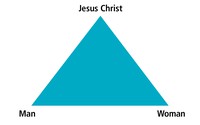
We can begin to strengthen and fortify our families as we implement the triangle that Elder Bednar describes:

“The Lord Jesus Christ is the focal point in a covenant marriage relationship. Please notice how the Savior is positioned at the apex of this triangle, with a woman at the base of one corner and a man at the base of the other corner. Now consider what happens in the relationship between the man and the woman as they individually and steadily “come unto Christ” and strive to be “perfected in Him” (Moroni 10:32). Because of and through the Redeemer, the man and woman come closer together” (Bednar -Covenant Marriage Relationship Bednar 2006).

If couples begin by strengthening themselves individually and as a couple, they then create a covenant marriage versus a contractual marriage. This becomes even more important as we understand the enemy’s intent to destroy marriage and family. According to Bruce C. Hafen:

“When troubles come, the parties to a contractual marriage seek happiness by walking away. They marry to obtain benefits and will stay only as long as they’re receiving what they bargained for. But when troubles come to a covenant marriage, the husband and wife work them through. They marry to give and to grow, bound by covenants to each other, to the community, and to God. Contract companions each give 50 percent; covenant companions each give 100 percent” (Hafen, 255-65).

Understanding and applying the doctrine in The Family: A Proclamation to the World (First Presidency), committing to our part of the triangle, and working to create a covenant marriage, can all help fortify us against the enemy’s intentional lies, distortions, and misrepresentations of marriage and family.

Works Cited:

Bednar, https://www.lds.org/study/ensign/2006/06/marriage-is-essential-to-his-eternal-  plan?lang=eng

Hafen, B. C. & Hafen, M. K. The Belonging Heart (1994), 255–65; Pitirim Sorokin, Society, Culture and Personality, 2nd ed. (1962), 99–107.

Smith, J 12 (Links to an external site.)Links to an external site.https://www.lds.org/manual/teachings-joseph-smith/chapter-17?lang=eng (Links to an external site.)Links to an external site.

The First Presidency and Quorum of the Twelve Apostles, “The Family: A Proclamation to the  World,” Ensign, Nov. 1995, 102.