As a child of divorced parents, I related to Amato’s, “The Impact of Family Formation Change on the Cognitive, Social and Emotional Well-Being of the Next Generation.” However, I especially related to the section on Quality of Parenting in this article. Amato states, “Regardless of family structure, the quality of parenting is one of the best predictors of children’s emotional and social well-being.
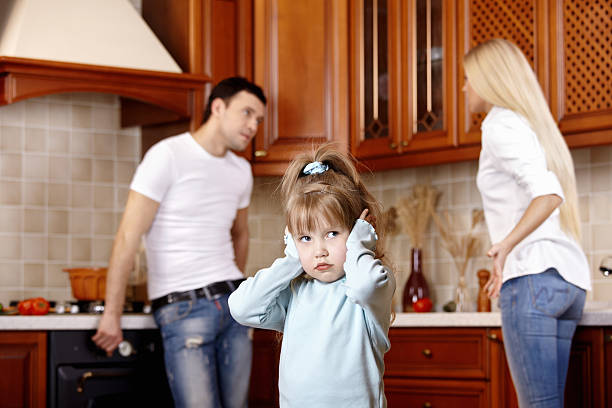
Although my situation didn’t involve co-parenting, it did involve a mother who was totally committed to us as a family and as children individually. I have always maintained that I didn’t experience much of the fallout of divorce because of a strong, steady, and spiritually committed mother. It was not easy in any way for her as she was required to return to the work force rather than stay at home. There was indeed stress in her life, but how she handled that stress never resulted in bad-mouthing my father regardless of how he might have warranted it. That taught me to be tolerant and respectful of others. It also taught me that regardless of the many, many, books written on parenting and the statistics on divorce and children, the spiritually faithful example and prayers of a righteous mother are far more powerful than any document or statistic. She remarried a good man and stepfather in the temple to further exemplify her strength and determination to bring gospel principles into our home and family, setting the example for me as I married 49 years ago.
Having said that, when reading about children of divorce, I do relate to some of the fallout such as economic hardship as a child, exposure to stress, and lower self-esteem. My mother valued education so the divorce never affected my education or my grades, as statistics indicate. Although my life at home was different than my friends’ homes, I never felt that I was less than or not accepted as an equal.
My mother carried some personal self-doubt from her childhood and I too lived with lower self-esteem than I would have liked. In turn my children have had to learn to build their self-esteem. I have tried to teach the principles of “Transitional Character,” addressed by Carlfred Broderick. “A transitional character is one who, in a single generation, changes the entire course of a lineage.” Hopefully they will pass on less and less self-esteem issues to their children.
Though not as serious and destructive as abuse, there are many characteristics such as pride, impatience, moodiness, intolerance, need to control, laziness, etc., that can make marriages and families suffer. I have therefore encouraged my children and others to look at things in their family that they may not like and become the one who, “in a single generation, changes the entire course of a lineage. Their contribution to humanity is to filter the destructiveness out of their own lineage so that the generations downstream will have a supportive foundation upon which to build productive lives.” (Broderick)
References:
Armato, P. (Fall, 2005). The impact of family formation change on the cognitive, social, and emotional well-being of the next generation. The Future of Children, 15(2), 75-96
Broderick, Carlfred (1992). Marriage and the Family. New Jersey: Prentice-Hall). pg 18.

 BEYOND "I DO "